Most founders meet submission sites as one long spreadsheet: review marketplaces, launch platforms, AI directories, forums and generic web directories, all in one column with a “submitted” checkbox next to each. That spreadsheet hides the most useful fact about them. The different types of SaaS submission sites don’t do the same job, and treating them as interchangeable is how you end up with wasted forms, early rejections and a report that counts a Product Hunt launch and a dusty web directory as the same win.
A review marketplace holds a durable profile that honest reviews make useful. A launch packs attention into one day that needs you present. A community post is a conversation with rules. A generic web directory needs real scrutiny before it gets your URL. Once you can tell the types apart, you’ll know what to prepare for each one and what result to expect, before you spend a minute on a form. Looking for vetted destinations rather than a map? Our SaaS submission sites page has them.
The Eight Types of SaaS Submission Sites
Here’s the cheat sheet. Each type is described along the same three lines: what it delivers, what it needs from you, and how long the result lasts. Link handling isn’t one of them, on purpose. It varies site by site within every type and can change without notice. Rules, prices and review times quoted here are as of November 2026, and platforms tweak them, so give the live page a quick look before you commit.
| Type | What it delivers | What it needs from you | How long it lasts |
|---|---|---|---|
| Review marketplaces | Presence where B2B buyers compare | Category fit; reviews as users arrive | Durable; grows with reviews |
| Alternatives sites | Visitors comparing tools | A known tool you credibly replace | Durable |
| Launch platforms | Concentrated attention and feedback | A usable product and a staffed day | A spike, then an archive |
| Curated startup lists | Early adopters and waitlist signups | Newness to the audience; often a fee | A feature, then an archive |
| AI tool directories | Browsers looking for AI tools | AI at the core; sometimes a fee | Durable but crowded |
| Niche and vertical directories | A small, highly relevant audience | A clear fit with the niche | Durable |
| Communities | Conversation, feedback, credibility | Genuine participation by the maker | As long as the thread lives |
| Generic web directories | Citations at best | Careful vetting | Durable; quality varies |
Keep eligibility separate from the work it takes to get value from a channel. A usable product, a working integration or the maker’s participation may be a hard requirement. Reviews strengthen a marketplace profile, but a minimum customer or review count isn’t a universal condition for creating or claiming one. And only some of these channels suit repetitive, form-based work. For the specific rules behind each type, our breakdown of SaaS directory submission requirements goes platform by platform.
What a Submission Site Is Not
Search engine submission often sneaks onto the same checklists, and it shouldn’t be there. Submitting a sitemap or requesting a recrawl through Search Console helps a search engine discover and inspect pages you control. Google’s documentation on asking Google to recrawl URLs explains those routes and notes that a crawl request doesn’t guarantee inclusion in search results. It creates no third-party profile and no link, so keep it in your technical launch checklist and out of your submission report.
The same goes for social media profiles and your own blog posts. They’re useful, but they’re channels you control, not sites that accept or reject your product. That’s the real test: a SaaS submission site is a third-party website where you add your product, usually through a form, so that its visitors can find it, and someone other than you decides whether it gets listed.
App stores are the borderline case. The Chrome Web Store or Apple’s App Store is where an extension or app gets distributed, so it’s a release step rather than a marketing channel, with a review process of its own. Chrome’s review documentation says most extension reviews finish within a few days but can take up to a few weeks. Get the store listing approved first, then submit to the directories that fit the product. Integration marketplaces are a different story: they count as submission sites, and you’ll meet them below as the most demanding kind of niche directory.
How to Tell Which Type a Site Is
A site’s name rarely tells you its type; plenty of launch boards call themselves directories. Open it signed out and answer these questions in order. The first “yes” is usually the type.
- Is there a dated board, such as today’s or this week’s products, where entries compete for votes? It’s a launch platform.
- Does it feature a small, editorially chosen set of new startups, often for a fee? It’s a curated startup list.
- Do product pages collect ratings and written reviews from verified users? It’s a review marketplace.
- Are pages built around “alternatives to” a known tool? It’s an alternatives site.
- Is every listing an AI tool? It’s an AI tool directory.
- Is every listing for one industry, technology, buyer type or host platform? It’s a niche or vertical directory, and app marketplaces belong here too.
- Do you post into a thread that members discuss and moderators police? It’s a community.
- Does it accept any website on any topic? It’s a generic web directory.
Many sites run two types at once, and Product Hunt is the famous example. Is it a directory or a launch platform? Mainly a launch platform. A launch is scheduled, goes live at midnight Pacific time and runs for a full day, and homepage featuring is an editorial decision. But the product page stays up afterwards, and Product Hunt’s product page guide adds a returning product’s new launch to that existing page. So plan it as an event, then keep the page’s facts current like any durable listing.
DevHunt's FAQ runs the same split differently, separating a free permanent page for developer tools from a paid weekly launch. Classify a hybrid by the part you'll actually use, and track it under that type, because the launch and the permanent page need different preparation and produce different results.Persistent Listings That Keep Working
Review marketplaces and alternatives sites share one lovely trait: once you’re accepted, the listing stays and keeps working without a launch date. What makes each one valuable is completely different, though.
Review Marketplaces: Buyers, but Only With Reviews
Review marketplaces are where business buyers shortlist vendors. They compare features, pricing and other customers’ experiences, often late in a purchase decision. That makes them the most commercially relevant type on the list, and the one where the bare listing does the least.
Category placement comes first. G2’s categorization methodology shows how strict this can be: products are categorized by the functionality of the software, a product has to meet all of a category’s feature requirements, and G2’s research team evaluates the evidence. G2 also now operates Capterra, Software Advice and GetApp, so the same review-marketplace logic increasingly applies across those sites.
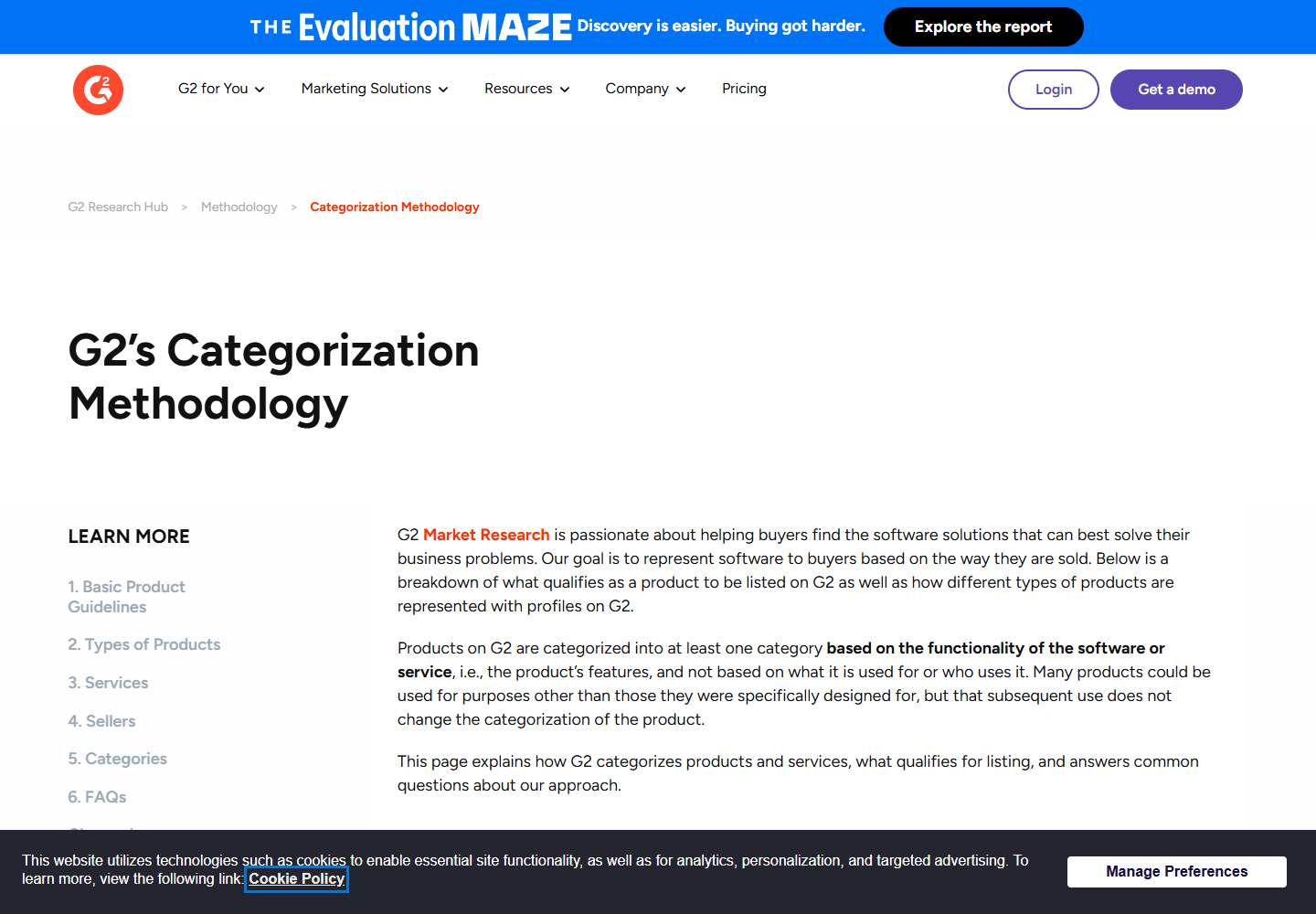
G2 assigns categories by what the software does, so a marketplace listing starts with an honest feature inventory. Screenshot from September 2026.
When this type works, you get a page buyers trust, social proof from verified customers and visibility in category comparisons. To get there, you need paying business customers, a process for asking them to review you through the platform’s own channels, and a feature set that genuinely matches a category.
The classic mistake is creating the profile and stopping. An empty profile next to established competitors is a shop window with nothing in it: it tells a buyer you’re new and unproven. If you can’t start collecting reviews soon after claiming the profile, claim it, complete it, and put your energy elsewhere until you can.
Alternatives Sites: Visitors Already Comparing
Alternatives sites organize software around one question: what else does this job? Software directories organize it by category and use case. Both send visitors who are actively looking for a tool, usually earlier in the journey than review marketplace visitors.
AlternativeTo's FAQ shows how the alternatives model works in practice. Two apps count as alternatives when their main task and focus match, not merely when they share features, and users vote on whether a suggested alternative is valid. The site also has firm eligibility rules: announced-only apps, closed or invite-only betas and Early Access apps aren't accepted, an open public beta may qualify, and thin wrappers around AI models may be declined.This type needs two things from you: a released product, and honest positioning against tools people already know. If you can’t name the established products you replace, you’ll struggle here. If you can, these listings quietly keep working for years. Our SaaS directories hub is a good place to collect candidates for this layer.
Key Takeaway: A persistent listing is only as good as the facts in it. Before you submit to any review marketplace or alternatives site, write down your category, your real competitors and the features you can demonstrate today. Those three answers decide whether you’re accepted and whether the right visitors find you.
Event Channels: Launches and Curated Lists
Event channels give you attention packed into a short window. That’s their strength and their limitation: the window is narrow, the audience expects you to show up, and you can’t easily run it again. Think live gig, not studio album.
Launch Platforms: A Spike and Fast Feedback
A launch platform lists new products on a daily or weekly board where users browse, vote and comment. You get concentrated attention from early adopters, a burst of feedback and a page that stays archived afterwards. For some products, it also brings the first wave of signups from outside the founder’s network.
It needs more than a form. Most launch platforms expect a usable product, prepared visuals, a short and specific description, and a maker who answers questions throughout the launch window. Getting a page and getting promoted are often separate outcomes: Product Hunt’s featuring guidelines describe homepage featuring as an editorial decision that neither submission nor votes guarantee, with live products prioritized over waitlists. So a launch belongs at or after public availability, or alongside a major release.
The key decision is timing, not which platform. A launch on a day when nobody can answer comments burns an event you can’t easily repeat. If you’re weighing options, our list of startup launch platforms compares the main boards and their audiences.
Curated Startup Lists: Reach Early Adopters
Curated startup lists sit between launches and directories. They feature new startups, often before public launch, and they apply editorial criteria about what counts as new and interesting enough.
BetaList is the textbook example. Its criteria fit technology startups that are new to its audience, whether pre-launch, in beta or already live, with no fixed cutoff in months since launch. A startup can be featured up to twice, once pre-launch and once at launch, with time between them. Its help page says every submission requires payment, with an automatic full refund if a startup is rejected.
The payoff is early adopters, waitlist signups and initial feedback before you’ve spent months building in private. The price is a real landing page, a clear signup path, good timing and often a budget. The main limitation is novelty. These lists want products their audience hasn’t seen, so a product that has already circulated widely gets less from them.
That’s also why they matter: so few other types welcome very early products. Our startup directories list includes curated lists that do.
Specialist Channels Trade Reach for Relevance
Specialist audiences are smaller and narrower than anything above. When your product fits, that’s exactly why they’re worth your time. When it doesn’t, no amount of copywriting fixes it.
AI Tool Directories: Browsers by Use Case
AI tool directories catalogue products by what the AI does: writing, image generation, transcription, coding assistance and so on. Visitors arrive looking for an AI tool for a specific task. That’s a very good audience if AI is central to your product and a poor one if it isn’t.
This type varies more in its business model than any other. Some AI directories are free and curated by a small team, some charge for a listing, and some offer a free queue with a paid way to skip it. Prices and policies here move fast, so write down what a fee actually buys before you pay.
What it needs: AI as genuine core value, a description that explains the specific task and its limits, and an honest pricing label. A general SaaS with an AI-powered button rarely benefits. A product whose main value is an AI workflow often does. Our AI directory submission page covers preparation for this type in detail.
Niche and Vertical Directories: Small but Relevant
Niche directories focus on an industry, a technology or a buyer type: software lists for healthcare practices, tools for e-commerce stores, resources for developers, vendor lists maintained by industry associations, and similar. Their visitors are fewer, but they share context with your product, which also makes these listings topically relevant links when the site links out.
Integration marketplaces belong in this type too, and they’re the most demanding version of it. The audience already pays for the host platform and is looking for something that works with it, which is about as qualified as visitors get. The requirements reflect that. HubSpot’s App Marketplace listing requirements, for example, ask for at least three active, unique installs in unaffiliated production accounts with activity in the last 30 days, OAuth as the only authorization method, public setup documentation, and listed pricing that matches the pricing on your website.
That’s product work, not marketing admin. For other niche directories the bar is usually lower, but the principle holds: the closer the fit, the more the listing is worth. Our article on niche-specific backlinks for SaaS goes deeper on finding these sites.
Communities: Submission Means Participation
Communities look like submission sites from a distance, because you post a link and people see it. Up close, they’re the opposite of a directory. The community decides whether your post is a contribution or an advertisement, and moderators and members enforce the rules.
Show HN's guidelines make this explicit. A Show HN is for something you personally built that people can try now, ideally with as few sign-up or email barriers as possible, and you should be around to discuss it. Waitlist pages, lists and blog posts are off topic, and you shouldn't ask people to upvote. Since people will try your product on the spot, make sure the basics hold up first; the free [startup launch checklist](/free-tools/startup-launch-checklist) covers them.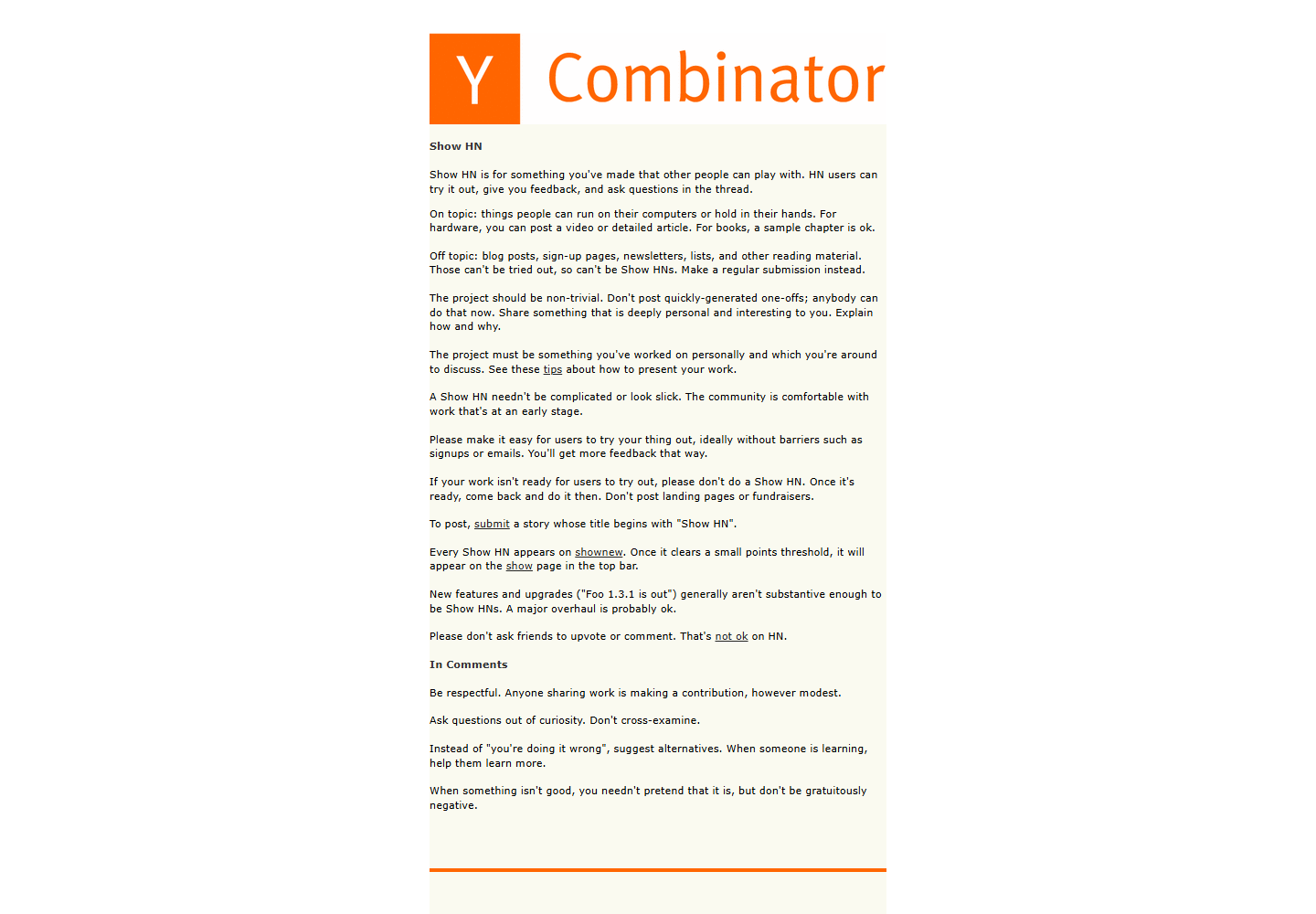
Show HN defines a format for sharing work people can try, with the maker present. Screenshot from September 2026.
What Communities Deliver and How to Measure It
Communities deliver conversation: technical questions, objections you hadn’t heard, feature requests, and occasionally a lasting relationship with early users. Traffic can follow, but it’s a side effect of a useful contribution, not the purpose.
So measure community posts accordingly. Record the questions people asked, the objections that came up more than once, and how many visitors from the post actually activated. A thread that produced three sharp product insights and modest traffic was a success, whatever the analytics dashboard says.
Why Communities Aren’t an SEO Channel
Links in community posts and comments are user-generated content. Google’s guidance on qualifying outbound links recommends marking user-generated links such as comments and forum posts with the ugc attribute, and many communities do. Posting in communities to collect links misreads the type and usually breaks community rules along the way.
Every community has its own self-promotion norms. Before posting in a subreddit, a founder forum, or a Slack or Discord group, read the rules and look at how successful posts are framed. Participate before you promote.
Generic Web Directories Need the Most Care
Generic web directories accept almost any website across every topic. Some are old, maintained and moderated. Many are not, and those are the sites behind most of the bad reputation directory submission has.
What Google’s Policies Say
Google’s spam policies list “low-quality directory or bookmark site links” as an example of link spam, alongside manipulative paid links, excessive link exchanges and automated link creation. Google’s guidance on qualifying outbound links also prefers paid placements to carry the sponsored attribute. Put those together, and a generic directory selling followed links, or demanding a reciprocal link as the price of a listing, is offering something Google’s own guidance treats as a problem.
None of this means every broad directory is harmful. An accurate listing on a moderated site is a different thing from a ranking-manipulation campaign. It means this type has the widest spread of quality, so it needs the most careful vetting and offers the least upside when it goes right.
So which type is best for SEO? No type guarantees SEO value, and Google doesn’t publish a rule that directory or marketplace listings help rankings. In practice, the most useful contributions tend to come from relevant, well-maintained sites: software directories, alternatives sites and niche directories where your product sits among related tools. Link handling varies by site, so check live listings rather than trusting labels. Communities often mark links as user-generated, and generic web directories carry the most risk. Choose types for audience fit first. Any SEO benefit is a bonus, not the plan.
Warning Signs to Watch For
- Thousands of unrelated categories with no visible moderation.
- Paid “permanent dofollow” packages or guaranteed ranking claims.
- A listing that depends on linking back from your site.
- Listing pages that don’t appear in search or sit behind a login.
When a Generic Directory Still Makes Sense
Generic directories can be reasonable when they’re curated and moderated, organize listings into real categories, and show recent, legitimate businesses in those categories. Business directories also matter for companies with a physical presence or a local customer base. Our list of business directories covers that use case, though most online-only software companies don’t need local listings.
For a SaaS with no local component, treat generic web directories as the last layer, not the first. If you want help separating usable candidates from risky ones, our guide on how to choose SaaS directories sets out the checks.
Put the Types in Order
Every type has a prerequisite, so the right order is simply the order in which your product meets them:
- While you’re new: curated startup lists and community participation.
- Once people can use the product: software directories and alternatives sites.
- When you can staff it: a launch.
- Once customers can review you: review marketplaces.
- Wherever you genuinely fit: specialist channels.
- Last, if at all: generic web directories.
Our startup directory submission page covers timing those submissions and sending them in waves.
Then track each type against its own definition of done. A durable listing is done when it’s live and accurate. A launch is done when the comments are answered and the feedback is written up. A review marketplace is never really done, because it depends on an ongoing review flow.
“Live and accurate” is also why you rarely resubmit when your product changes. Most persistent types, including directories, alternatives sites and review marketplaces, let you claim and edit your profile, and a second listing for the same product tends to create duplicates that editors remove or merge. When your name, pricing model, category or core features change, work through your live listings and correct them; our guide on how to submit your SaaS lists the maintenance triggers worth watching. Launch platforms and curated lists are different. They’re tied to a moment, so a meaningful new release may justify a new launch, while small updates don’t.
Key Takeaway: Choose by prerequisites, not by excitement. The question isn’t which site is biggest, but which types your product already qualifies for and can benefit from this month.
Match the Types to Your Product
Prerequisites tell you when a type opens up. Your product and buyer decide which open types deserve the effort. Use this table as a starting split, then adjust it to where your buyers actually browse.
| Your product | Start with | Deprioritize |
|---|---|---|
| B2B SaaS with paying teams | Software directories, alternatives sites, review marketplaces | Generic web directories |
| Consumer or prosumer app | Launch platforms, alternatives sites, communities | B2B review marketplaces |
| Developer tool | Communities, developer launch boards, niche directories | Generic web directories |
| AI-first tool | AI tool directories, alternatives sites, launch platforms | Review marketplaces until teams pay |
| Vertical SaaS for one industry | Niche directories, review marketplaces | Broad launch boards |
| Product built on a host platform | That platform’s marketplace, software directories | Generic web directories |
| Pre-launch product | Curated startup lists, communities | Review marketplaces, alternatives sites |
Four rows need a caveat.
Consumer and prosumer apps shouldn’t make review marketplaces a priority. B2B review marketplaces are built for business purchasing decisions, and G2 goes further: its listing documentation says it doesn’t accept business-to-consumer products. These products generally get more from alternatives sites, launch platforms, curated startup lists, communities and niche directories that match their audience. The exception is a product sold to both individuals and teams: once the team plan has paying business customers, a review marketplace profile can make sense. Match the type to the person who actually pays, not to the list of sites your competitors happen to appear on.
Developer tools often have their own launch boards with their own terms; DevHunt, for example, lists only tools for developers. A vertical SaaS gets more from one industry list its buyers actually read than from a broad board where it’s one of hundreds of launches that day. And a product built on a host platform has its most qualified audience in that platform’s marketplace, but only once it meets the marketplace’s thresholds, which makes the listing an engineering milestone rather than a submission task.
If your product spans two rows, such as an AI tool sold to teams, use the union of the “start with” columns and drop only what both rows deprioritize. Still unsure where you land? The submission quiz helps you think through how much directory work your product needs and whether to do it yourself.
Effort, Waiting Time and Measurement
The types also differ in what they cost you per site and how long you wait for a result. Some waiting times are published, which makes them easy to plan around. G2’s create-a-profile page estimates about 3 to 5 business days for research verification and 1 to 3 business days for claim approval. AlternativeTo’s FAQ says its normal queue holds several thousand apps, with paid priority usually reviewed within one to two business days. Slack’s Marketplace review guide allows up to 10 weeks for the functional review of a new app. Those estimates were current as of November 2026, and queues are the first thing to drift.
| Type | Your effort per site | Waiting time | Main measure |
|---|---|---|---|
| Review marketplaces | Setup, then an ongoing review program | Days for verification and claim | Recent reviews; profile activity |
| Alternatives sites | Low once copy and competitors exist | Days to months in queues | Referral sessions |
| Launch platforms | A full day of presence, plus prep | The date you book or are given | Sign-ups from the launch |
| Curated startup lists | Low; mostly the fee decision | Set by the list’s plan or queue | Waitlist or trial sign-ups |
| AI tool directories | Low per site; fees vary | Days, weeks or no reply | Referral sessions; trial starts |
| Niche and vertical directories | Low, except marketplace builds | Varies; marketplaces take weeks | Referral sessions; installs |
| Communities | Hours in the thread | Immediate | Feedback captured |
| Generic web directories | Low per site, plus vetting | Varies | Live and indexed, or not |
Money is the other cost, and the good news is that free usually goes a long way. Many of the most relevant destinations, including major software directories, alternatives sites and basic review marketplace profiles, offer free listings. Not every type does: some curated startup lists, such as BetaList, are paid-only. Paid options usually buy faster review, better placement, an upgraded page or simple consideration, and they’re worth it only when you can name the benefit. Be wary of paid listings sold mainly as followed links, since Google asks for paid placements to be marked as sponsored. Our comparison of paid vs free SaaS directories walks through the decision.
Where to Find the Numbers
- Referral sessions. In Google Analytics 4, open Reports, then Acquisition, then Traffic acquisition. The report opens on its default channel grouping; use the dimension drop-down above the table to switch to Session source / medium, then look for each site’s domain.
- Tagged links you control. Where you write the link yourself, such as a launch post, a community profile or a paid placement, add campaign parameters. Google’s guide to custom campaign URLs recommends always using utm_source, utm_medium and utm_campaign, and notes that values are case sensitive, so pick lowercase and stick with it.
- Linking sites. Search Console’s Links report lists top linking sites under External links. It’s a sample, includes links Google found over time, and doesn’t show whether a link is nofollow, so confirm attributes on the live listing itself.
Then review the numbers by type, not as one grand total. A launch platform and a niche directory both “sent traffic,” but one did it in a day and the other does it every month. Lumping them together tells you nothing about which to do again.
Map Your Product to the Right Types
You can now look at any submission site and ask three questions: what type is it, what does it deliver, and does your product meet its prerequisite today? Put that to work before the next form.
- Write your stage and buyer on one line. For example: “Newly public, sold to web agencies, no AI features.” Then cross out every type that doesn’t fit.
- Sort your candidate list by type. Run each site through the eight questions, and drop anything that lands in a type you crossed out.
- Give each type its own definition of done. Live and accurate for listings, answered comments for launches, a steady review flow for marketplaces.
- Decide what to delegate. Launches, communities and review requests depend on you. The repetitive directory layer doesn’t, and that’s what SubmitSaaS covers as a done-for-you directory submission service: automation plus human review, submissions made within the package’s 48-hour submission turnaround, and a submission report with screenshots of the submitted work. Each directory then reviews on its own timeline, and paid-only directories aren’t included. Packages are on the pricing page.
Know the type before you touch the form, and you’ll stop filling in the ones that were never going to work for you.