Product Hunt can absolutely give you a spike. It can also give you a stressful launch day, a few nice comments, and not much else. That’s why smart founders don’t build their entire release plan around one leaderboard.
If you’re looking for real product hunt alternatives, this is the shortlist that actually matters. Some platforms are better for pre-launch buzz. Some are better for backlinks. Some are better for buyers who are already comparing tools. The point isn’t to be everywhere. It’s to show up in the places that fit the launch you’re actually running.
1. BetaList
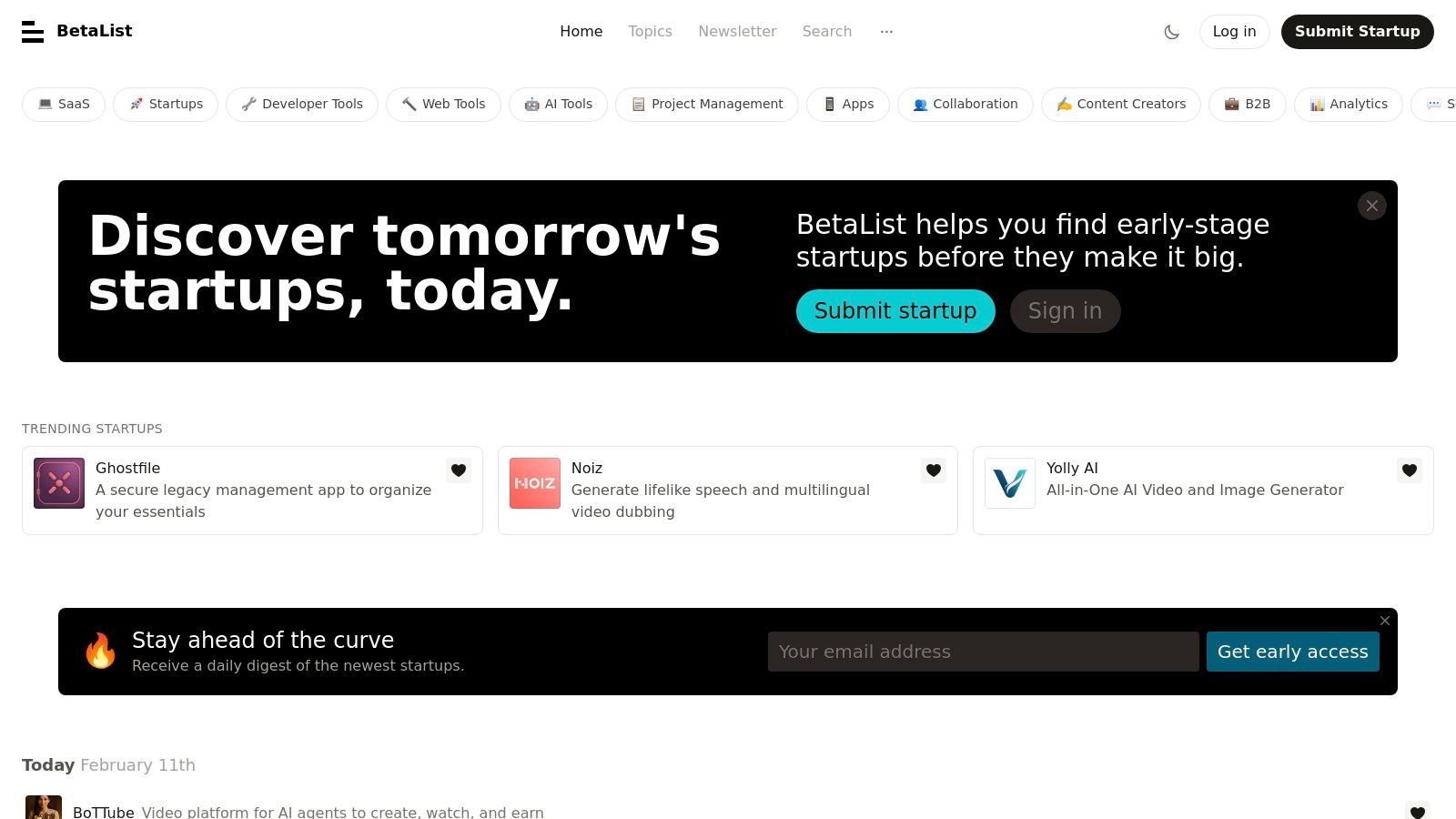
BetaList is a long-standing and well-respected platform for discovering and getting discovered, making it one of the premier Product Hunt alternatives for pre-launch startups. Its primary focus is on featuring companies that have not yet publicly launched, allowing founders to build an email list and validate their idea with an audience of keen early adopters. The platform’s editorial curation ensures that only polished, interesting concepts make it to the homepage.
This strict “pre-launch” criteria is its key differentiator. Unlike platforms that feature established products, BetaList carves out a niche for founders who need to test product-market fit and generate initial buzz before a full-scale release.
Key Features & Use Case
BetaList is ideal for gathering your first 100 to 1,000 email signups from a highly targeted audience. The submission process is straightforward, requiring a well-designed landing page that clearly communicates your value proposition.
- Submission Options: There’s a free submission path, but the wait time can be extensive (often over two months). To expedite the process, you can opt for the paid “Priority Review” for a one-time fee, which guarantees a review within 48 hours.
- Best For: Validating a startup idea, building a pre-launch email list, and securing your first cohort of beta testers.
- Audience: The user base consists of tech enthusiasts, fellow founders, and venture capitalists actively looking for the “next big thing.”
Pros & Cons
| Pros | Cons |
|---|---|
| Audience is specifically seeking brand-new, unreleased products. | Strict “newness” criteria can disqualify recently launched products. |
| Strong brand reputation lends credibility to featured startups. | The free submission queue is very long. |
| Paid priority option offers a refund if your startup isn’t accepted. | Exposure is less explosive than a top spot on Product Hunt. |
| Excellent for collecting targeted feedback and initial signups. | Requires a polished landing page to even be considered. |
How to Succeed on BetaList
To maximize your chances, ensure your landing page is professional, has a clear call-to-action for email signups, and concisely explains the problem you solve. If managing multiple directory submissions feels overwhelming, using a service to handle your startup listings can streamline the process for platforms like this and many others.
Website: https://betalist.com
2. PitchWall (formerly BetaPage)
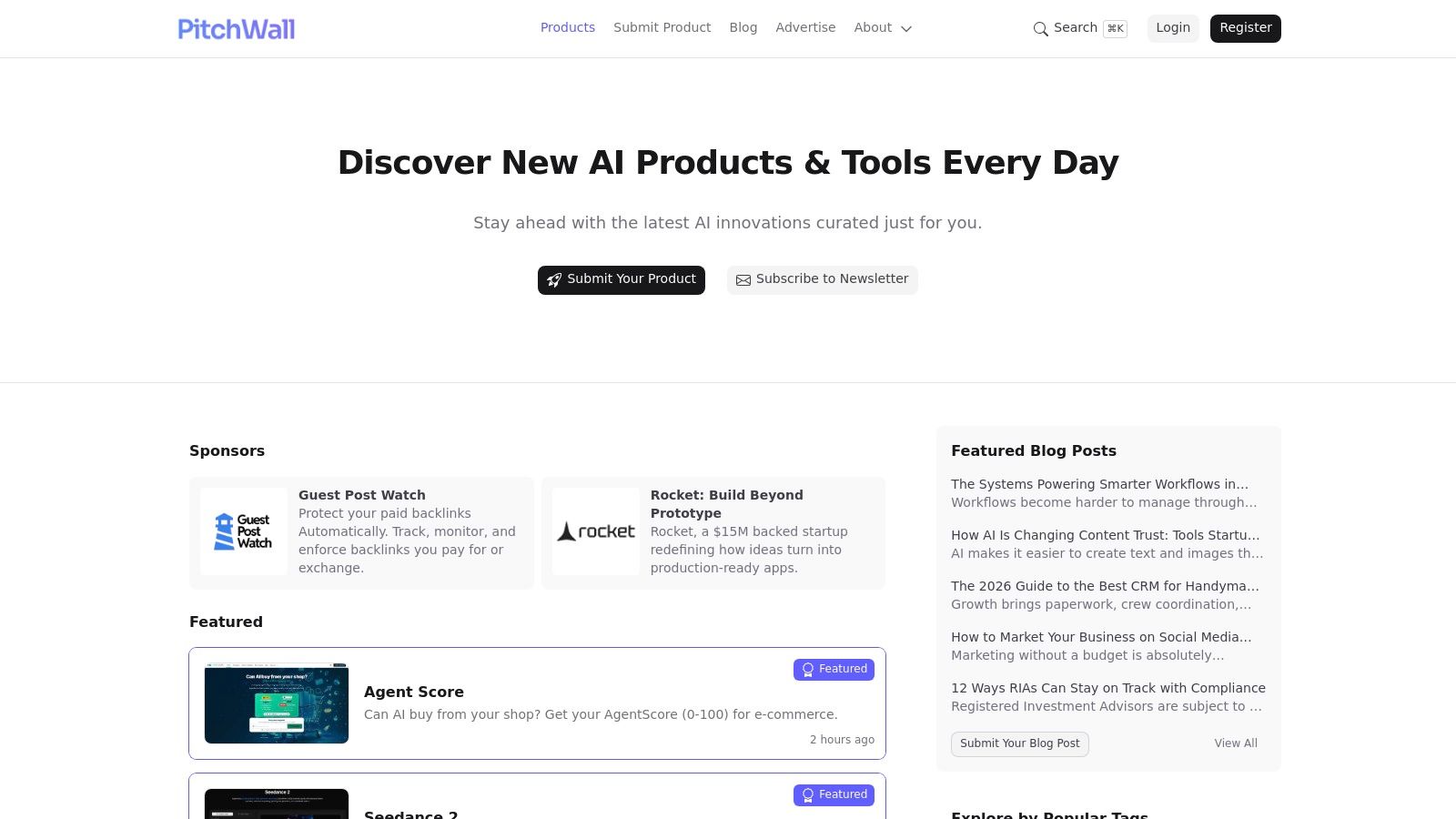
PitchWall, formerly known as BetaPage, is a daily-updated directory that has carved out a strong niche in spotlighting new AI products and tools. It serves as an excellent Product Hunt alternative for founders in the artificial intelligence space who are looking for rapid exposure. The platform allows for free product submissions, ensuring a low barrier to entry for early-stage startups aiming to get their name out there quickly.
The key differentiator for PitchWall is its sharp focus on AI and its fast inclusion cadence. While other platforms might have a long and uncertain review queue, PitchWall’s model is built for speed, making it ideal for founders who want to build momentum with multiple, smaller launch announcements.
Key Features & Use Case
PitchWall is best used for gaining initial traction and visibility within a targeted, AI-savvy community. The submission process is lightweight, requiring basic product information, a link, and a brief description, which allows for quick listing.
- Submission Options: It offers a free submission model for basic listings. For those seeking guaranteed visibility, there are paid options for featured placements and sponsorships that push a product to the top of its category or homepage.
- Best For: AI and SaaS founders who need quick, targeted exposure, building initial backlinks, and testing product messaging with an engaged audience.
- Audience: The user base is heavily skewed towards AI enthusiasts, developers, and tech professionals specifically looking for the latest tools in the AI ecosystem.
Pros & Cons
| Pros | Cons |
|---|---|
| The audience has a strong, specific interest in AI tools. | The AI focus may limit visibility for non-AI or general SaaS products. |
| The submission and inclusion process is fast and simple. | Premium exposure and top placement rely on paid sponsorship options. |
| Excellent for building niche-relevant backlinks quickly. | Traffic volume is more modest compared to larger, broader platforms. |
| Free listings offer a no-cost way to test the platform. | The interface is functional but less polished than top-tier competitors. |
How to Succeed on PitchWall
To get the most out of PitchWall, clearly highlight your product’s AI-driven features in your description. Use keywords that the AI community would search for. Since the process is fast, consider timing your submission to coincide with other marketing efforts to create a coordinated buzz around your launch.
Website: https://pitchwall.co
3. Hacker News: Show HN
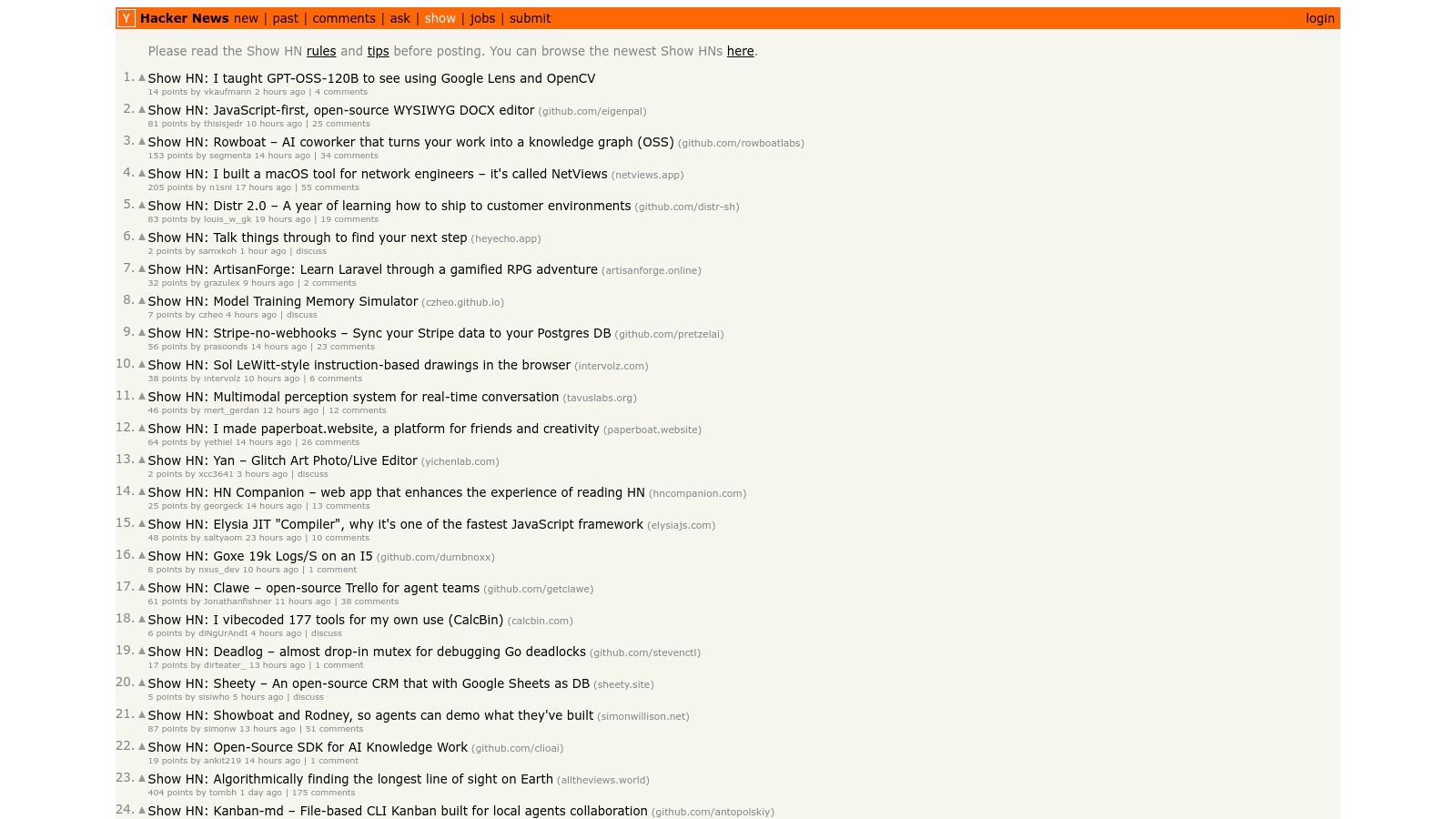
Hacker News, run by the influential incubator Y Combinator, is a cornerstone of the tech community. Its “Show HN” section is a powerful Product Hunt alternative for founders looking to get their project in front of a highly technical and discerning audience. This is not a platform for marketing hype; it is a place for creators to share what they have built and receive direct, unfiltered feedback.
The community’s deep technical knowledge is its defining feature. A successful “Show HN” post can trigger insightful discussions, uncover critical bugs, and generate a significant wave of traffic from developers, engineers, and tech executives who value substance over style.
Key Features & Use Case
Show HN is ideal for getting a hands-on demo or a new project in front of users who can provide high-signal feedback. Posts that make it to the front page often experience the “Hug of Death,” a massive, temporary traffic spike that can stress-test servers and provide invaluable data.
- Submission Guidelines: Posts must begin with “Show HN:” and are intended for sharing projects you have personally worked on. Marketing-heavy language is strongly discouraged in favor of a straightforward, technical explanation.
- Best For: Gaining feedback from an expert technical audience, stress-testing infrastructure, and finding early adopters who are developers or engineers.
- Audience: The user base is composed of software developers, founders, VCs, and tech enthusiasts who appreciate engineering-first products.
Pros & Cons
| Pros | Cons |
|---|---|
| Completely free to post and gain massive potential exposure. | The community is highly skeptical of marketing-speak and hype. |
| Provides direct, high-quality feedback from a technical user base. | A poorly presented project can receive harsh and very public criticism. |
| A front-page post can drive significant, high-quality traffic. | Visibility is fleeting; posts have a short lifespan on the front page. |
| Strong potential for attracting technical co-founders or first hires. | Requires an authentic, engineering-focused presentation to succeed. |
How to Succeed on Hacker News
To succeed, be present in the comments to answer technical questions and engage with feedback authentically. Your title and the first comment should clearly explain what the project is, the problem it solves, and the technology behind it. Avoid marketing jargon at all costs and focus on the “what” and “how” of your creation.
Website: https://news.ycombinator.com/show
4. Indie Hackers
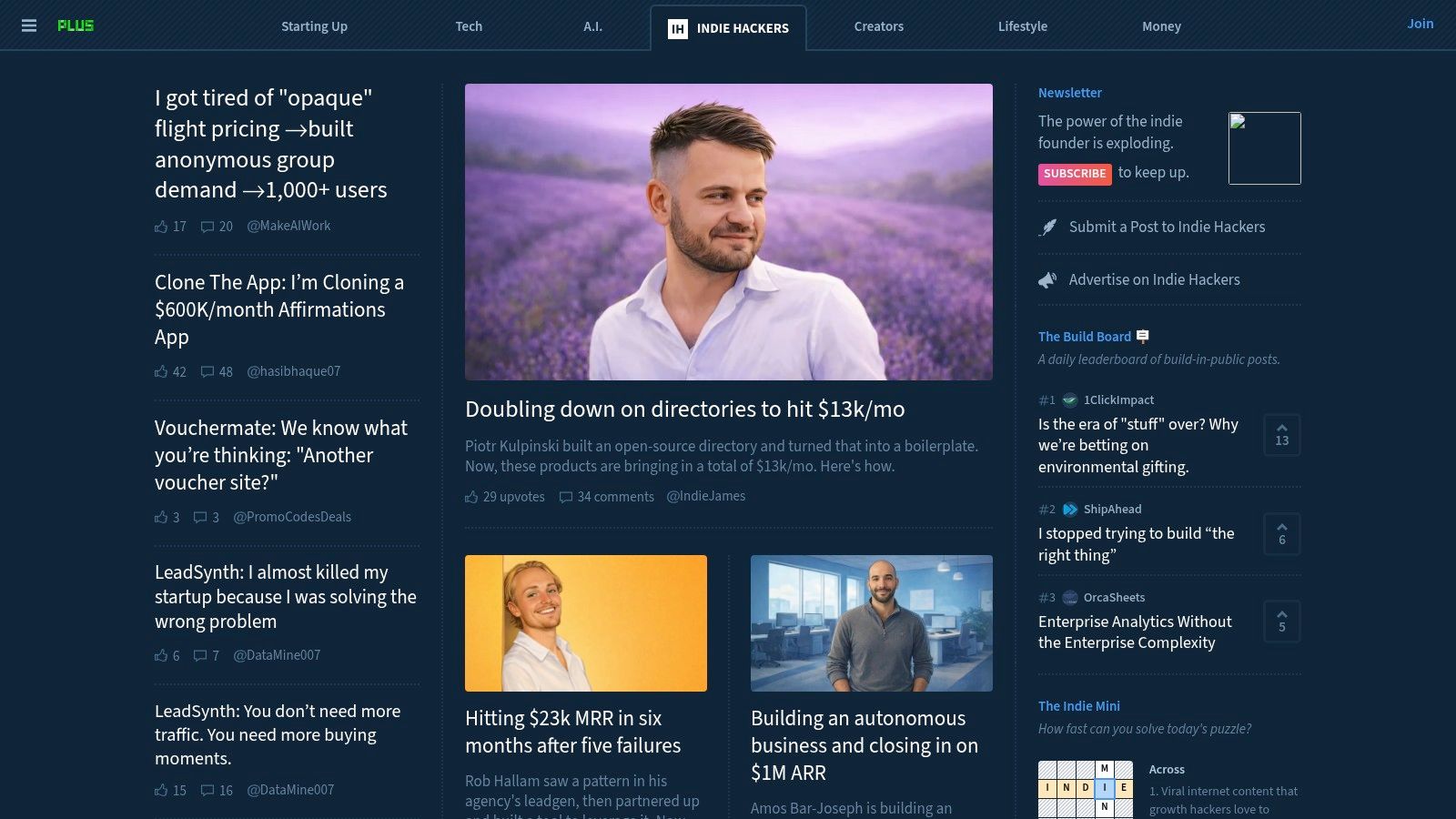
Indie Hackers is less a launch platform and more a vibrant community where founders, developers, and entrepreneurs “build in public.” It serves as an excellent Product Hunt alternative by offering a space for authentic, narrative-driven product discovery. Instead of a single launch event, founders can share their journey through posts, product milestones, and group discussions, building an audience organically over time.
This community-first approach is its greatest strength. Success here isn’t about a one-day spike but about consistent engagement, sharing learnings, and getting valuable feedback directly from fellow makers who understand the startup grind.
Key Features & Use Case
Indie Hackers is perfect for founders who want to build a brand around their story and connect with a supportive peer group. It is entirely free to participate and share your product.
- Community Engagement: You can drive traffic and interest by writing posts about your launch, sharing revenue milestones, or asking for feedback on new features.
- Best For: Gaining founder-to-founder advice, long-term audience building, and driving targeted traffic from an engaged user base.
- Audience: The community is almost exclusively composed of solopreneurs, bootstrappers, and early-stage startup founders.
Pros & Cons
| Pros | Cons |
|---|---|
| Strong concentration of early-stage founders and makers. | Attention is competitive; consistent engagement is needed to stand out. |
| Completely free exposure when posts gain traction. | Requires authentic community participation, not just pure marketing. |
| Excellent for getting high-quality, actionable feedback. | Less effective for a single, explosive “launch day” event. |
| Builds brand credibility and a personal following over time. | The audience is more technical and less consumer-focused. |
How to Succeed on Indie Hackers
Focus on providing value first. Share your revenue numbers, detail a failed marketing experiment, or ask insightful questions. A launch post framed as “Here’s what I built and what I learned” will perform far better than a simple promotional announcement. Genuine participation is the key to visibility.
Website: https://www.indiehackers.com
5. AlternativeTo
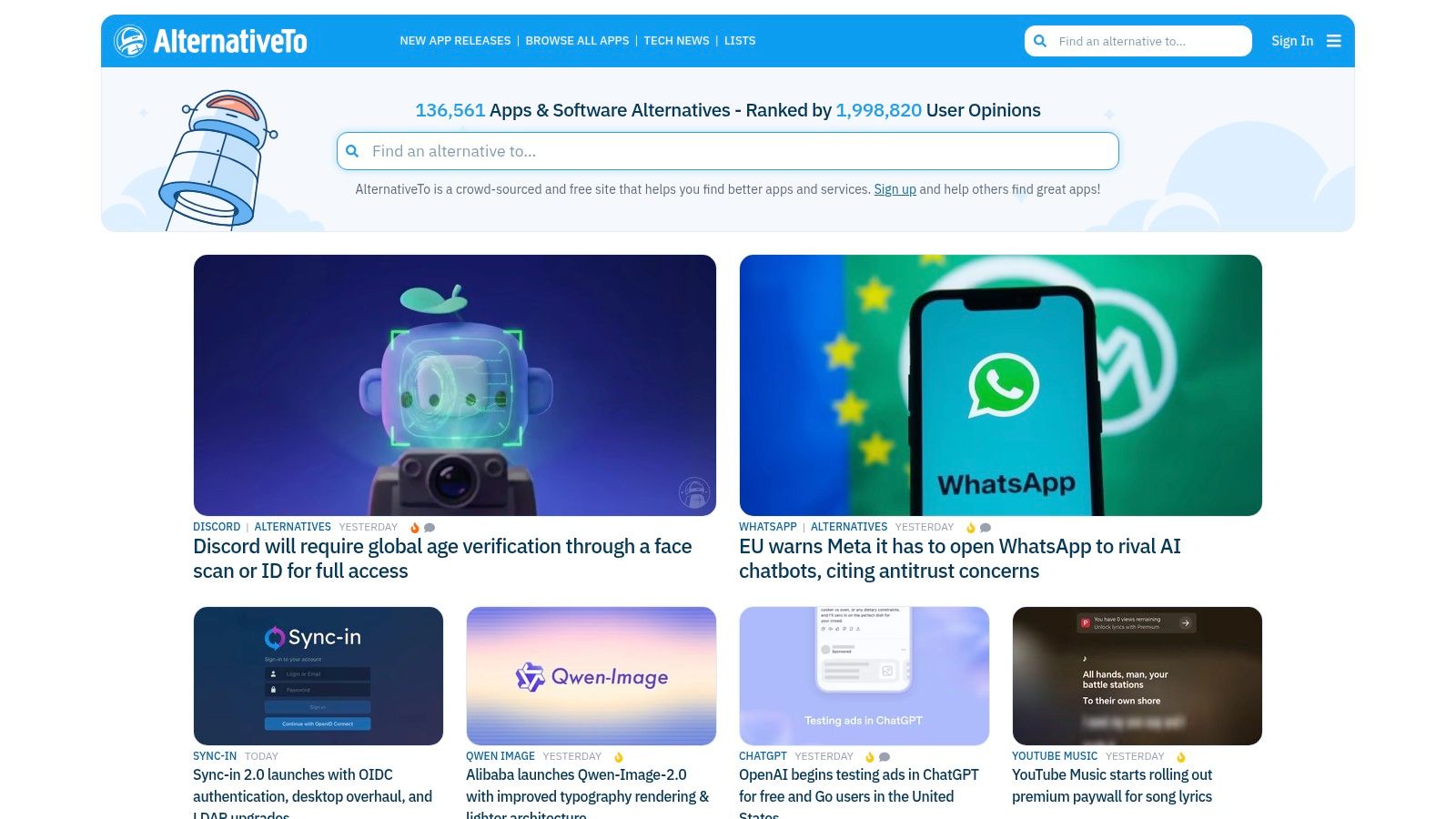
AlternativeTo is a massive, community-driven software discovery engine that serves as a long-term strategic asset rather than a one-day launch platform. It functions as a powerful Product Hunt alternative by capturing users actively searching for replacements for existing tools, making it a goldmine for long-tail SEO and consistent referral traffic. Instead of a fleeting, chronological feed, it offers persistent, detailed product pages that users find when comparing software.
The platform’s value lies in its user-generated nature. Users suggest alternatives, leave reviews, and tag features, creating a rich ecosystem of interconnected software pages. This community aspect means your product gets discovered by users with high commercial intent who are already in a decision-making mindset.
Key Features & Use Case
AlternativeTo is best used for establishing a permanent, discoverable presence that targets competitor-aware users. Claiming your product page allows you to add accurate descriptions, screenshots, and links, ensuring potential customers get the right information.
- Submission Options: Listing your software is completely free. Founders can submit a new application or claim an existing, user-generated page to update its details.
- Best For: Capturing competitor-comparison traffic, building long-term SEO value, and generating a steady stream of high-intent leads.
- Audience: The audience consists of users actively evaluating new software, ranging from individual consumers to IT professionals looking for specific business solutions.
Pros & Cons
| Pros | Cons |
|---|---|
| Generates consistent, long-tail referral traffic over time. | No single “launch day” boost; visibility is gradual. |
| Excellent for SEO and appearing in competitor-related searches. | Visibility depends heavily on community upvotes and engagement. |
| Completely free to list and maintain your product page. | Less effective for generating immediate, pre-launch buzz. |
| Places your product directly alongside established competitors. | An unmanaged page can contain outdated or inaccurate information. |
How to Succeed on AlternativeTo
Success on this platform is a marathon, not a sprint. After listing your product, encourage happy users to leave reviews or suggest it as an alternative to popular tools in your niche. Keeping your page updated with the latest features and screenshots is crucial. Managing listings across multiple startup directories like this can be time-consuming, so leveraging a submission service can help maintain a consistent and optimized presence.
Website: https://alternativeto.net
6. G2
G2 is a leading B2B software and services review marketplace, making it a powerful Product Hunt alternative for established companies targeting mid-market and enterprise clients. Its authority comes from verified user reviews, which buyers use extensively to evaluate, compare, and shortlist vendors. Unlike a one-day launch platform, G2 offers a continuous, long-term presence where customer feedback builds credibility over time.
The platform’s core differentiator is its role in the high-consideration purchase journey. Buyers trust G2 for unbiased peer insights, and a strong profile can directly influence sales pipelines and purchasing decisions, moving it beyond a simple discovery tool into a critical sales and marketing asset.
Key Features & Use Case
G2 is ideal for generating social proof, capturing leads from high-intent buyers, and building brand trust in the B2B space. The foundation is a free profile where you can collect and display customer reviews.
- Submission Options: Creating a basic vendor profile is free. Paid plans (Starter, Pro, Power) unlock lead generation tools, buyer intent data, enhanced profile features, and promotional content opportunities.
- Best For: B2B SaaS companies targeting corporate buyers, building a reputation through verified reviews, and generating high-quality inbound leads.
- Audience: The primary audience consists of decision-makers, IT professionals, and business leaders actively researching and comparing software solutions for their organizations.
Pros & Cons
| Pros | Cons |
|---|---|
| Highly trusted in enterprise and mid-market buyer journeys. | Paid plans can be very expensive for early-stage or small vendors. |
| Robust tools for collecting, managing, and syndicating reviews. | Using G2 badges for marketing often requires a paid plan after year one. |
| Strong domain authority can provide valuable SEO benefits. | Success requires a sustained effort to gather new, high-quality reviews. |
| Generates high-intent leads from active buyers. | Less effective for B2C products or startups without an existing user base. |
How to Succeed on G2
Success on G2 hinges on a proactive review generation strategy. Encourage happy customers to leave detailed, honest feedback by creating review campaigns. Fully populate your profile with up-to-date product information, screenshots, and videos to give potential buyers a comprehensive overview. Earning category-leading G2 badges is a key goal, as they provide powerful social proof for your website and marketing materials.
Website: https://www.g2.com
7. Capterra
While not a launch platform in the same vein as Product Hunt, Capterra is an indispensable resource for B2B SaaS companies seeking long-term visibility and credibility. As part of the Gartner Digital Markets network, it is one of the world’s largest software review directories, making it a powerful Product Hunt alternative for building trust and capturing high-intent buyers. Its authority in search engine results means a well-optimized profile can become a significant source of referral traffic over time.
Capterra’s value lies in its focus on peer reviews and detailed categorical organization. Instead of a one-day launch spike, it offers a sustainable channel for discovery where potential customers are actively comparing solutions.
Key Features & Use Case
Capterra is ideal for established products looking to build social proof and compete in a defined software category. The platform is built to help buyers make informed decisions, so a strong review base is crucial for success.
- Submission Options: Creating a basic vendor profile is free. Capterra also offers paid programs for sponsored placements and lead generation, which can significantly increase visibility in competitive categories.
- Best For: B2B SaaS companies seeking to generate qualified leads, build a strong review portfolio, and improve their search engine presence.
- Audience: The audience consists primarily of business decision-makers, IT managers, and software buyers who are actively researching and comparing tools for purchase.
Pros & Cons
| Pros | Cons |
|---|---|
| High-authority domain provides excellent SEO value and user trust. | Highly competitive, with visibility often dominated by paid placements. |
| Free vendor profiles can generate organic traffic and social proof. | Gaining initial reviews can be a slow process without a dedicated effort. |
| Reviews-as-a-Service (RaaS) helps you solicit genuine user feedback. | Primarily focused on established software, not pre-launch startups. |
| Listings are distributed across GetApp and Software Advice. | Lead quality from paid programs can sometimes be mixed. |
How to Succeed on Capterra
Success on Capterra depends on completeness and reviews. Fill out every section of your profile with detailed information, screenshots, and videos. Proactively use their review collection tools to build a steady stream of authentic user feedback, as this is the single most important factor for ranking organically within categories.
Website: https://www.capterra.com/vendors/
8. GetApp
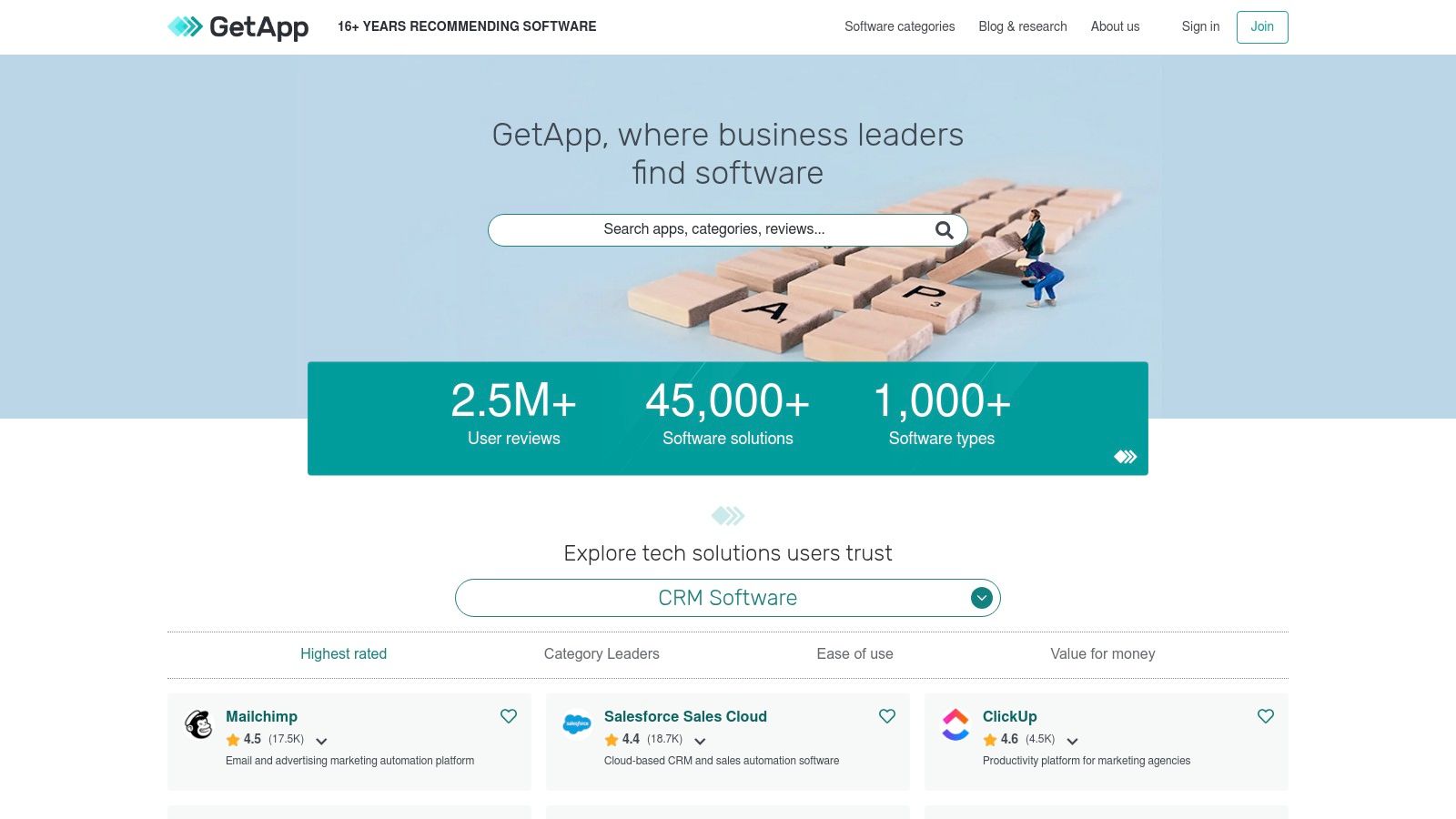
GetApp, a part of the Gartner Digital Markets network alongside Capterra and Software Advice, is a powerful B2B software discovery platform. It functions less like a launch-day site and more like a comprehensive directory where users compare solutions side-by-side. This makes it a strong Product Hunt alternative for established products looking to capture high-intent buyers actively researching their options.
Unlike platforms focused on fleeting daily launches, GetApp provides lasting visibility within specific software categories. Its strength lies in its filter-based discovery, allowing users to find tools based on pricing, features, and integrations, placing your product directly in front of a qualified audience.
Key Features & Use Case
GetApp is designed for capturing long-term, organic traffic from buyers deep in the consideration phase. Getting listed here means your product profile is also distributed across the wider Gartner network, multiplying your reach.
- Submission Options: Listing is free, but your product must be a market-ready B2B or B2C packaged solution. Beta products are accepted only if they provide full, working access to reviewers.
- Best For: Generating qualified leads, collecting user reviews, and gaining visibility in competitive software categories.
- Audience: The platform attracts business decision-makers, IT professionals, and department managers who are comparing and purchasing software for their teams.
Pros & Cons
| Pros | Cons |
|---|---|
| Listing distributes your profile across the Gartner Digital Markets network. | Strict editorial discretion means some products may not be accepted. |
| Captures high-intent users actively comparing software solutions. | Incomplete or duplicate listings can lead to rejection. |
| Strong for building social proof through verified user reviews. | Less about launch-day buzz and more about steady lead generation. |
| Free to list and can generate significant long-term referral traffic. | Requires a market-ready product, not just a landing page or waitlist. |
How to Succeed on GetApp
Success on GetApp requires a complete and compelling profile. Fill out every section, encourage satisfied customers to leave detailed reviews, and ensure your product is placed in the most relevant categories. A well-optimized profile here acts as a permanent asset for lead generation.
Website: https://www.getapp.com
9. AppSumo
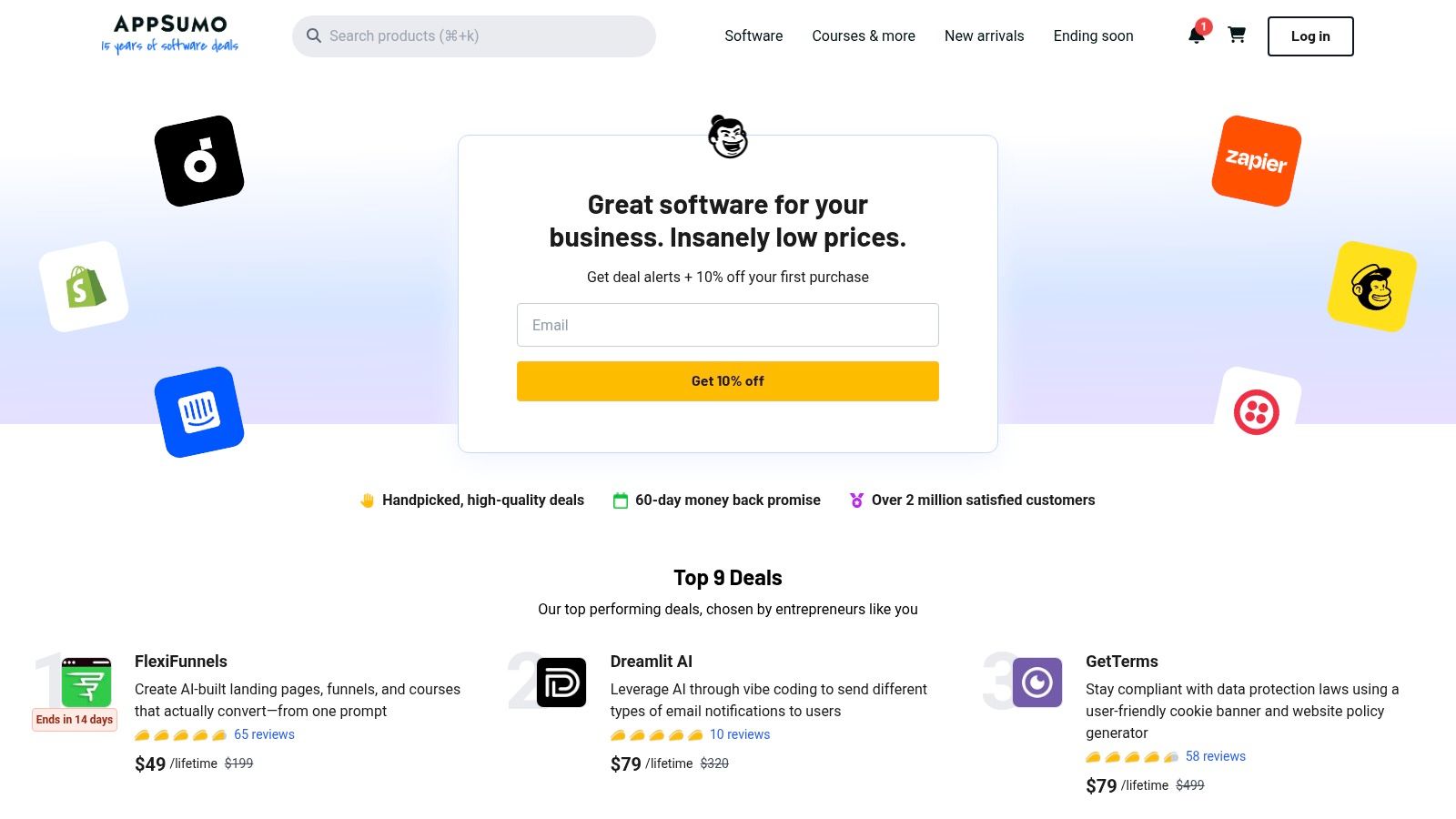
AppSumo is a massive marketplace for lifetime software deals, functioning as a powerful Product Hunt alternative for founders seeking rapid user acquisition and a significant cash injection. It connects SaaS products with a huge, deal-hungry audience of entrepreneurs and small business owners. Unlike typical launch platforms, AppSumo is a long-term partnership that involves a formal vetting process and a deeply discounted offer.
The platform’s primary value proposition is its enormous promotional reach. A successful launch on AppSumo can lead to thousands of new users and substantial upfront revenue, driven by its extensive email list, affiliate network, and dedicated community.
Key Features & Use Case
AppSumo is best for B2B SaaS companies with low marginal costs that can sustain a large influx of lifetime-deal users. The platform provides a unique opportunity to gain market traction, gather extensive feedback, and generate brand evangelists.
- Submission Options: Becoming a partner requires an application and a thorough vetting process. AppSumo curates its “Select” deals, which receive the most marketing support.
- Best For: Generating immediate cash flow, acquiring a large volume of users quickly, and stress-testing your product infrastructure.
- Audience: A diverse mix of solopreneurs, agency owners, marketers, and startup founders actively looking for tools to grow their businesses at a discount.
Pros & Cons
| Pros | Cons |
|---|---|
| Access to a huge, engaged audience ready to buy software. | Requires offering a steep, often lifetime, discount. |
| Can generate a massive number of new users and revenue in a short period. | Formal vetting and partner approval process is required. |
| Strong promotional push from AppSumo’s marketing channels. | Attracts deal-seeking customers who may have high support needs. |
| Community reviews and feedback provide valuable product insights. | May not align with SaaS models built on recurring revenue. |
How to Succeed on AppSumo
Success on AppSumo depends on a well-structured offer and exceptional customer support during the launch period. Be prepared for a high volume of questions and feedback. The process of getting listed can be intensive, and managing it alongside other directory submissions can be a challenge. Tools that manage multiple listings can help streamline this entire process; you can explore startup submission service pricing to see how it fits your budget.
Website: https://appsumo.com
10. DealMirror
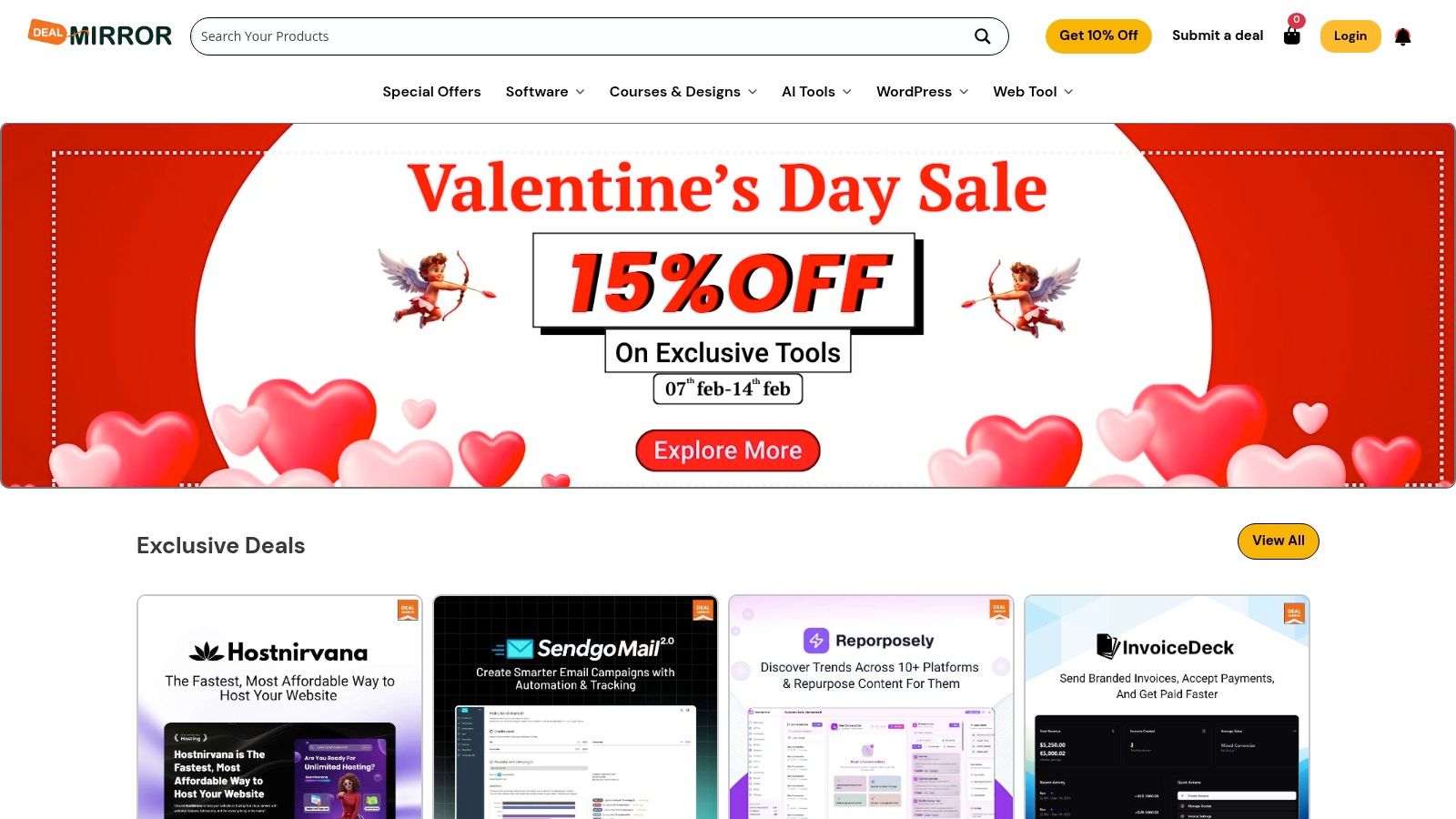
DealMirror is a lifetime deal (LTD) marketplace that serves as a powerful, sales-focused Product Hunt alternative for SaaS and digital tools. It allows founders to generate immediate revenue and user acquisition by offering their products at a significant one-time discount. Unlike pure discovery platforms, DealMirror is a direct sales channel, attracting an audience specifically looking to purchase software.
Its self-serve vendor dashboard and transparent revenue-share model make it more accessible for early-stage startups compared to highly curated marketplaces like AppSumo. This approach empowers founders to manage their own listings and promotions.
Key Features & Use Case
DealMirror is ideal for founders aiming to generate a quick injection of cash flow, gather a large volume of early users, and test their product’s appeal in a competitive marketplace. The platform provides clear guidelines and an affiliate program to help drive initial traction for your deal.
- Submission Options: The platform uses a self-serve vendor dashboard where you can submit your product, set pricing tiers, and manage your listing. Revenue share terms are published upfront.
- Best For: Generating immediate revenue, acquiring a large user base quickly, and gaining market feedback from paying customers.
- Audience: The user base consists of entrepreneurs, small business owners, and freelancers actively hunting for discounted software to build their tech stack.
Pros & Cons
| Pros | Cons |
|---|---|
| Lower barrier to entry compared to top-tier deal sites. | Audience size and brand recognition are smaller than market leaders. |
| Self-serve dashboard gives founders more control over their listing. | The revenue-share model (e.g., 50/50 split) significantly impacts revenue. |
| Generates immediate cash flow and user acquisition. | Attracts users who may be less likely to convert to full-price plans. |
| Clear submission guidance and affiliate support are provided. | Requires significant customer support resources to handle the user influx. |
How to Succeed on DealMirror
To launch a successful campaign, create compelling deal tiers that provide clear value. Ensure your product is stable and your support channels are ready to handle a sudden surge in new users. Actively engage with comments and questions on your deal page to build trust and drive conversions.
Website: https://dealmirror.com
11. SaaS Mantra (deals.saasmantra.com)
SaaS Mantra operates as a deal marketplace and founder community, positioning itself as a hands-on Product Hunt alternative for those seeking a more collaborative launch. Instead of just a listing, it offers partnership-style campaigns focused on generating early revenue, user feedback, and promotional support. The platform is built around creating lifetime deals (LTDs) to attract a large volume of initial users.
This emphasis on partnership is its core differentiator. SaaS Mantra’s team actively assists with onboarding, gathering customer feedback, and providing growth insights, making it a much more involved process than a simple directory submission.
Key Features & Use Case
SaaS Mantra is ideal for founders who are ready to offer a significant discount in exchange for rapid user acquisition, valuable feedback, and early case studies. The process begins with a partner submission form and onboarding flow where commercial terms are negotiated.
- Submission Options: All listings are handled through a partner submission and negotiation process. There is no simple free or paid tier; terms are set on a per-campaign basis.
- Best For: Securing a first wave of paying customers, validating use cases with real-world feedback, and generating initial revenue and reviews through a lifetime deal.
- Audience: The community consists of early adopters, entrepreneurs, and small business owners actively searching for discounted software tools to build their tech stack.
Pros & Cons
| Pros | Cons |
|---|---|
| Collaborative launch support goes beyond a simple listing. | Deal-driven buyers may expect deep, potentially unsustainable discounts. |
| Can significantly accelerate early reviews and user validation. | Commercial terms are negotiated per campaign and can vary. |
| Generates immediate revenue through the lifetime deal model. | Requires significant customer support resources to handle the influx of new users. |
| Provides direct access to a community of engaged buyers. | Not suitable for products that don’t fit the LTD model. |
How to Succeed on SaaS Mantra
Success requires being fully prepared for the support load that comes with a large influx of new users. Clearly define the terms of your lifetime deal, ensuring it’s sustainable for your business in the long run. Use the campaign as an opportunity to gather as much feedback as possible to refine your product and onboarding process.
Website: https://deals.saasmantra.com/partners
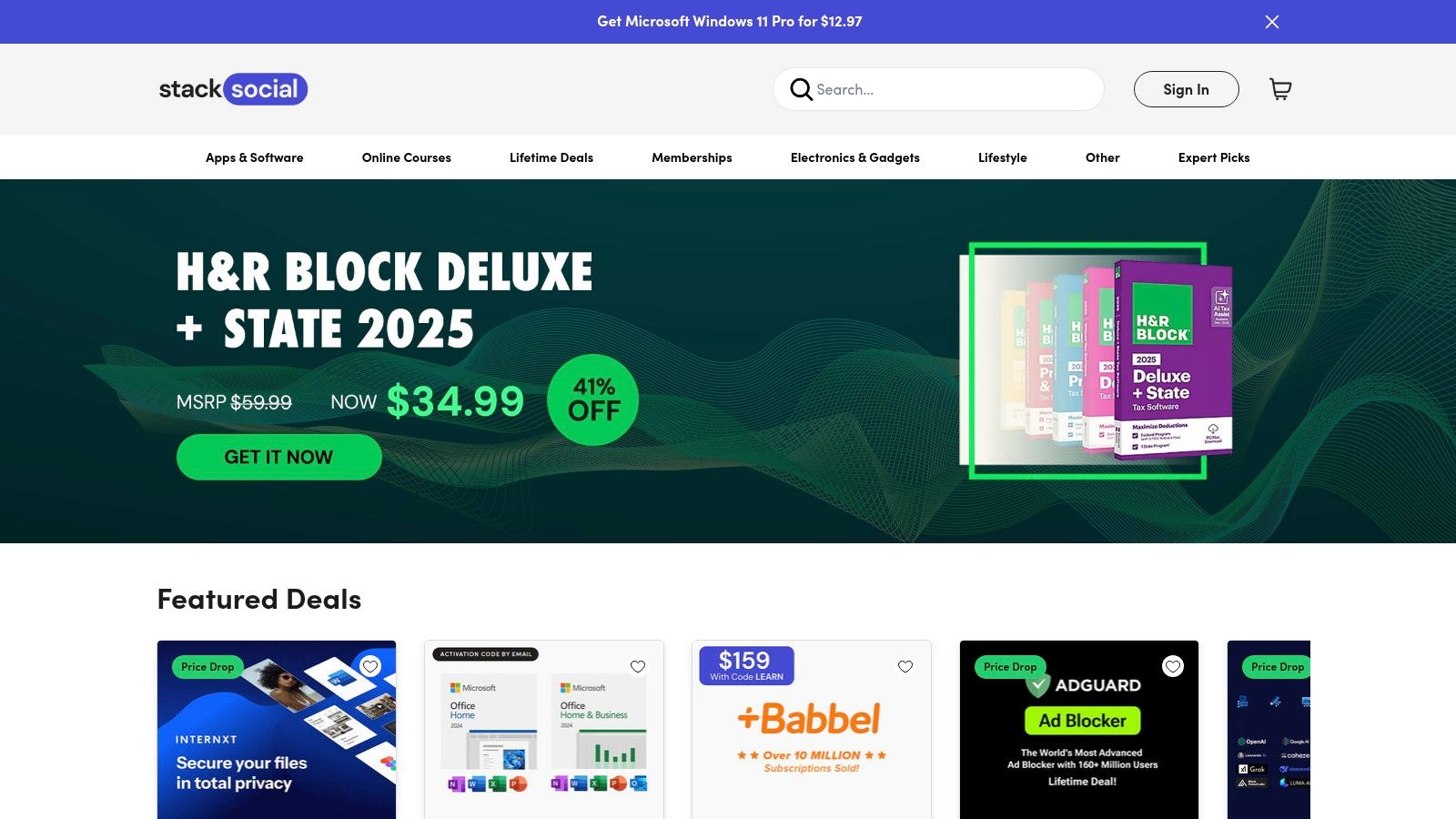
12. StackSocial
StackSocial operates as a commerce platform that blends consumer tech deals with software lifetime licenses, making it a powerful sales channel rather than a traditional launchpad. For SaaS founders, it serves as a unique Product Hunt alternative by focusing on driving sales and user acquisition through high-visibility merchandising placements and aggressive deal promotions. It’s less about community feedback and more about leveraging a massive audience to generate revenue.
The platform’s key differentiator is its commercial focus. Instead of just showcasing a product, founders can create compelling lifetime deals (LTDs) or heavily discounted subscriptions that are marketed directly to StackSocial’s large, U.S.-based audience of bargain-hunters and tech enthusiasts.
Key Features & Use Case
StackSocial is best used as a strategic sales and marketing channel to acquire a large volume of users quickly, especially for consumer-leaning or prosumer SaaS products. The onboarding process involves becoming a partner and working with their team to structure a compelling offer.
- Submission Options: There is no “submission” in the typical sense. You apply to become a partner through their vendor portal and negotiate a deal structure.
- Best For: Generating immediate revenue, acquiring a large user base through lifetime deals, and testing product appeal with a price-sensitive audience.
- Audience: A broad base of consumers and prosumers actively looking for discounts on software, courses, and tech gadgets.
Pros & Cons
| Pros | Cons |
|---|---|
| High-visibility merchandising and potential for high sales volume. | Mixed third-party feedback on deal quality and partner support. |
| Useful for consumer-leaning or prosumer SaaS categories. | Requires careful control of offer terms and license management. |
| Access to a large, established email and customer distribution list. | May attract users who are less likely to convert to full-price plans. |
| Can provide a significant, fast injection of cash flow. | Deal structure might devalue your brand if not managed carefully. |
How to Succeed on StackSocial
Success hinges on creating a sustainable and well-defined lifetime deal that doesn’t cripple your long-term business model. Clearly outline the limitations and features of your offer to manage customer expectations. Carefully consider the support costs associated with a sudden influx of thousands of new users.
Website: https://partners.stacksocial.com
12 Product Hunt Alternatives Compared
| Platform | Core Features | Reach & Quality (★) | Value Proposition (ðŸ†) | Unique Features (✨) | Target & Pricing (👥 / 💰) |
|---|---|---|---|---|---|
| BetaList | Editorial launch listings, priority review & paid boosts | ★★★★ - curated early-adopter audience | 🆠Early validation & discoverability for pre-launch products | ✨ Editorial review + refund for priority if rejected | 👥 Early-stage startups / 💰 Free basic; paid priority/boosts |
| PitchWall (BetaPage) | Daily AI-focused directory, fast submit + featured slots | ★★★★ - quick inclusion, AI-savvy readers | 🆠Rapid entry into AI product feeds | ✨ Topical AI spotlight & fast cadence | 👥 AI tool makers / 💰 Free submit; paid sponsorships |
| Hacker News - Show HN | Demo-first posts, community-driven feedback | ★★★★★ - high-signal technical audience, viral potential | 🆠Deep technical feedback & traffic spikes | ✨ Public engineering critique; authenticity rewarded | 👥 Engineers & dev-founders / 💰 Free |
| Indie Hackers | Founder community posts, product pages, milestones | ★★★★ - engaged maker audience, competitive attention | 🆠Founder-to-founder traction and qualitative feedback | ✨ Build-in-public + milestone visibility | 👥 Makers & indie founders / 💰 Free |
| AlternativeTo | Comparison pages, community ratings, SEO-rich listings | ★★★★ - steady long-tail referral traffic | 🆠Persistent discovery for comparison/search intent | ✨ Alternatives-focused pages & claim/update flows | 👥 Researchers & switchers / 💰 Free to claim; community-driven |
| G2 | Review marketplace, badges, analytics, paid tiers | ★★★★★ - trusted by buyers, high purchase intent | 🆠Enterprise credibility & review-driven shortlisting | ✨ Buyer intent data, category rankings & badges | 👥 Mid-market & enterprise buyers / 💰 Free profile; paid plans (costly) |
| Capterra | Large directory, RaaS, network distribution (GetApp/SA) | ★★★★★ - strong SEO & buyer trust | 🆠High discovery & conversion in B2B buyer journeys | ✨ Distribution across Gartner network | 👥 SMBs & US buyers / 💰 Free listing; sponsored placements paid |
| GetApp | Filtered app comparisons, accepts working access/betas | ★★★★ - filter-led discovery, complementary channel | 🆠Capture side-by-side comparison traffic | ✨ Detailed filters + Gartner network distribution | 👥 Comparison shoppers / 💰 Free listing; editorial review |
| AppSumo | Limited-time SaaS deals, partner vetting, affiliates | ★★★★ - large deal-hungry audience, big signup potential | 🆠Fast user acquisition & revenue spikes | ✨ One-time deal model + Beta-lings testing community | 👥 Deal-seeking users & founders / 💰 Revenue-share / deep discounts |
| DealMirror | Lifetime-deal marketplace, self-serve dashboard | ★★★ - accessible entry to deal market | 🆠Easier listing for early-stage founders | ✨ Self-serve onboarding & clear revenue-share terms | 👥 Early-stage founders / 💰 Revenue-share (eg ~50%), lower barrier |
| SaaS Mantra (deals) | Deal marketplace + launch partnership & promotion | ★★★ - campaign-style exposure & support | 🆠Collaborative launch support + early reviews | ✨ Partner onboarding + growth-oriented campaigns | 👥 Founders seeking launch help / 💰 Campaign fees negotiated |
| StackSocial | Commerce & deal platform, merchant onboarding, promos | ★★★★ - strong US merchandising reach | 🆠High-visibility merchandising for consumer SaaS | ✨ Email promos & featured merchandising slots | 👥 Consumer/prosumer SaaS / 💰 Revenue-share / negotiated fees |
Final Thoughts
Navigating the world beyond Product Hunt opens up a vast landscape of opportunities for founders, marketers, and indie hackers. While Product Hunt remains a powerful force, relying on a single platform for your launch and long-term visibility is a high-risk strategy. The true power lies in diversification, and as we’ve explored, the ecosystem of Product Hunt alternatives is rich with platforms tailored to specific goals, audiences, and product stages.
The key takeaway is this: your launch strategy shouldn’t be a one-off event but a continuous, multi-platform campaign. Each directory, community, and marketplace serves a unique purpose. Moving beyond the single-day launch spike mentality is crucial for sustainable growth.
Synthesizing Your Launch Strategy
Choosing the right platform isn’t about finding a direct replacement for Product Hunt; it’s about building a complementary stack that works for your product. Think of it as creating a portfolio of visibility. Your goal is to match your product’s current stage and specific needs with the strengths of each platform we’ve discussed.
Here’s a simplified framework to guide your decision-making process:
- For Early-Stage Validation & Feedback: If your product is pre-launch or in beta, platforms like BetaList and PitchWall are invaluable. They connect you with an audience of early adopters who are actively seeking new and unpolished ideas, providing the critical feedback needed to iterate.
- For Technical Audiences & Developer Tools: For products built by and for developers, nothing beats the raw, unfiltered feedback from communities like Hacker News (Show HN) and Indie Hackers. A successful post here can drive significant, highly qualified traffic and establish credibility within a discerning community.
- For Long-Term SEO & Lead Generation: To build a lasting digital footprint, focus on high-authority software review sites. Getting listed on G2, Capterra, and AlternativeTo is a long-term investment that pays dividends in organic traffic, high-intent leads, and powerful backlinks for years to come.
- For User Acquisition & Revenue Spikes: When you’re ready to acquire users at scale or generate a quick injection of cash, lifetime deal (LTD) marketplaces are your go-to. Platforms like AppSumo, DealMirror, and SaaS Mantra can put your product in front of a massive, purchase-ready audience, though it requires careful planning to manage the influx of new users.
The Path Forward: From Listing to Growth
Your journey doesn’t end after you’ve submitted your product to a few of these sites. The real work involves managing these listings, engaging with communities, and leveraging the momentum from one platform to gain traction on another. Remember that each submission, each comment, and each review is a building block for your brand’s authority and online presence.
The landscape of Product Hunt alternatives is not just a list of websites; it’s a strategic toolkit. By thoughtfully selecting platforms that align with your goals, you can de-risk your launch, build a resilient marketing engine, and ensure your product gets the sustained attention it deserves. Stop chasing a single viral moment and start building a foundation for enduring success.